

The Landscape
Every community is connected to disability, and it impacts more than 70 million people nationally and 1.6 billion people globally.
Disability encompasses a wide range of experiences—including mental health conditions—and is not always visible.
For example, individuals may have impairments related to vision or hearing, learning or understanding, movement or independence, or communication and sensory needs. It can be experienced from birth or acquired later in life.
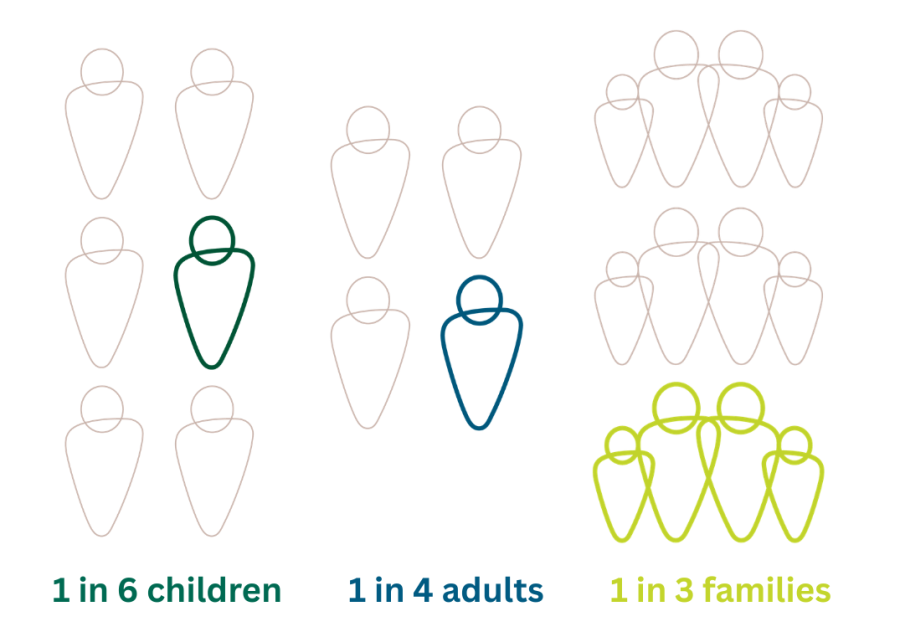
In schools, one in six children receives special education services for diagnoses that span dyslexia, autism, and intellectual disability. This accounts for the more than 7.5 million children and youth with disabilities in every city, county, and state across the United States.
As youth with disabilities transition into adulthood, adult populations are also impacted by disability. Among senior citizens over the age of 65, half have disabilities.
Each of these statistics combined makes up the one in every three households with at least one member who experiences disability.
Fifty years ago, people with disabilities were generally excluded from schools, workplaces, churches, and community life. Opportunities were scarce and consequently communities were incomplete.
As awareness and advocacy expanded, laws and policies changed. Still, most communities fell short of responding faithfully and holistically. Instead of making room for disability, alternate spaces were created. Many of the opportunities that emerged existed in segregated environments and life was still lived apart from one another.
Despite years of persistent advocacy, presently the 1.6 global citizens impacted by disability are only sparingly integrated into local schools and everyday community life—existing in proximity to one another, but not among one another.
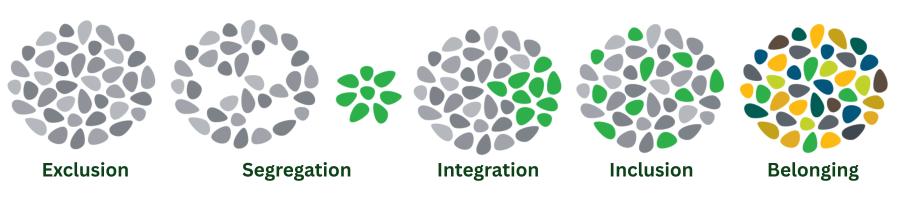
This pressing reality and desire for transformative change drives the work of the Center. We endeavor to ensure our friends and family members with disabilities are included in the same classrooms, colleges, congregations, and workplaces as everyone else.
We can do more. What lies beyond integration and inclusion?
Communities that are untethered to view each other not through the lens of labels, but through the lens of deep worth.
Communities where every person is seen as cherished and indispensable.
Communities that share not only space, but meaningful relationships, too.
This is the landscape our Center is positioning Baylor to help change—by channeling the best of what we know works to help communities move from exclusion to belonging and mutual flourishing.