

Congregational Learning Community
Application is now closed!
Our next Congregational Learning Community will run from August 2026 – December 2027. We look forward to beginning this new season! Updates will be shared soon.
Building bridges to belonging for youth and young adults (aged 13-25) with disabilities, mental health challenges, and chronic illnesses.
The Bridges to Belonging (B2B) Congregational Learning Community (CLC) is an 18-month process that equips church teams to reimagine accessible youth and young adult ministry through training, coaching, prayerful reflection, and practical tools.
What do we mean when we say disabilities, mental health challenges, and chronic illnesses? Check out our Insights Series for an introduction to these three topics.
The application for our next Congregational Learning Community is now closed. Please reach out to Elyse_McMullen@baylor.edu with any questions.
Who is Participating?
The Bridges to Belonging CLC is for churches ready to take meaningful steps toward accessible youth and young adult ministries.
The CLC is ideal for churches that:
Desire practical strategies to engage creatively with young people with disabilities, mental health challenges, and chronic illnesses
Are eager to foster belonging for young people in their midst
Are excited to try out new accessible practices
Are committed to long-term, impactful, congregation-wide change
Value collaboration, learning, and shared growth
To apply, you must be located within a two-hour radius of Baylor University. Churches from all denominations are invited to apply. Your application must include a letter of support from the lead pastor/senior minister.
Each participating church forms a core team of three to five individuals:
One youth or young adult minister*
At least two additional members (e.g. a church staff member, an individual with a disability, a youth or young adult, a volunteer, a lay leader, a parent/caregiver)
*If you do not have a youth or young adult minister on staff, a lay leader or volunteer may fill this spot. Core teams are most effective when they include at least one church staff member or someone with decision-making authority. Reach out to Elyse McMullen (elyse_mcmullen@baylor.edu) for more information.
About our Time Together
We anticipate selecting eight to ten churches to participate together in this 18-month cohort. Each church forms a core team and begins the journey with a two-day gathering at Baylor University in August 2026.
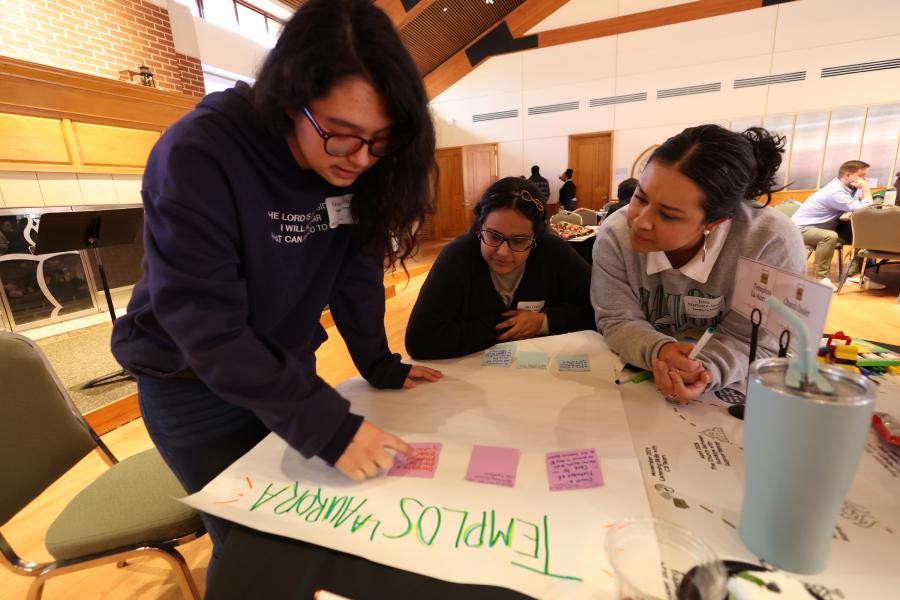
August 2026 – June 2027: In the first 12 months, our B2B team will guide your core team through a four-part learning and reflection process. We will visit your church beginning as early as July 2026. We will host your core teams here at Baylor for four in-person gatherings in August 2026, November 2026, March 2027, and June 2027. Between in-person gatherings at Baylor, core teams will be asked to complete learning activities and try out new practices. Each core team will be assigned to a pod of three participating churches. Pods will meet together three times for small group learning with a B2B team member, with each church serving as the host location once.
July 2027 – December 2027: The final six months will be an implementation phase in which core teams will propose and implement a culminating project focused on accessibility and inclusion for youth and young adults in their congregation. Our B2B team will providing ongoing coaching and support during this time. Core teams will conclude their journey in the CLC with a final visit to their church from our B2B team.
What You’ll Gain
Strengthen your ministry and outreach to young people in your community
Learn how to make your church and worship practices more accessible
Better attend to mental health needs in your midst
Engage young people with disabilities more fully in the life of the church
Receive free and practical resources
Learn from leading experts at Baylor University and beyond
Build relationships with other churches doing this work
Celebrate the unique contributions of young people with disabilities
Grow in your confidence in serving a greater diversity of youth
The Commitment
Our team will:
Equip your core team to learn about the gifts and needs of young people with disabilities
Host regular in-person gatherings at Baylor and at your church
Visit your church twice to learn more about your congregation and practices
Collaborate with your core team to provide ongoing guidance
Support your church in reflecting on its accessibility
Connect you with practical resources, experts in the field, and local organizations
Offer free training and support
Cover your cost of attending in-person gatherings at Baylor
Pray for your church
Your core team will:
Attend four in-person gatherings at Baylor University
Attend three in-person gatherings with your pod of three churches, including serving as a host location for one of these gatherings
Meet regularly as a core team between gatherings
Complete learning activities between gatherings
Try out new practices that increase youth participation and belonging
Help our team capture the change and the difference this work makes
Pray for this work
Key Dates
Applications Open: March 2, 2026
Priority Deadline: April 24, 2026
Final Deadline: July 6, 2026
Acceptance Communicated: Mid-May 2026
First Gathering: August 17-18, 2026
A Note About Funding: We are funded through the Lilly Endowment Inc.’s Thriving Congregations Initiative. Due to the generosity of our funders, there is no cost to participation in the CLC.
About Bridges to Belonging
The Bridges to Belonging project seeks to support congregations as they welcome and embrace young people (aged 13-25) with disabilities (including mental health challenges and chronic illnesses). Young people with disabilities can experience unique barriers to participation and flourishing in the local church. We will learn together how to engage creatively with young people with disabilities, reflect theologically on disability and ministry, and adapt and apply practices in accessible, enriching, and spiritually formative ways.
This exciting project is a collaboration among George W. Truett Seminary, the Baylor Center for Disability and Flourishing, and the Baylor Center for Church and Community Impact. We are funded through the Lilly Endowment Inc.’s Thriving Congregations Initiative.
Meet the Team
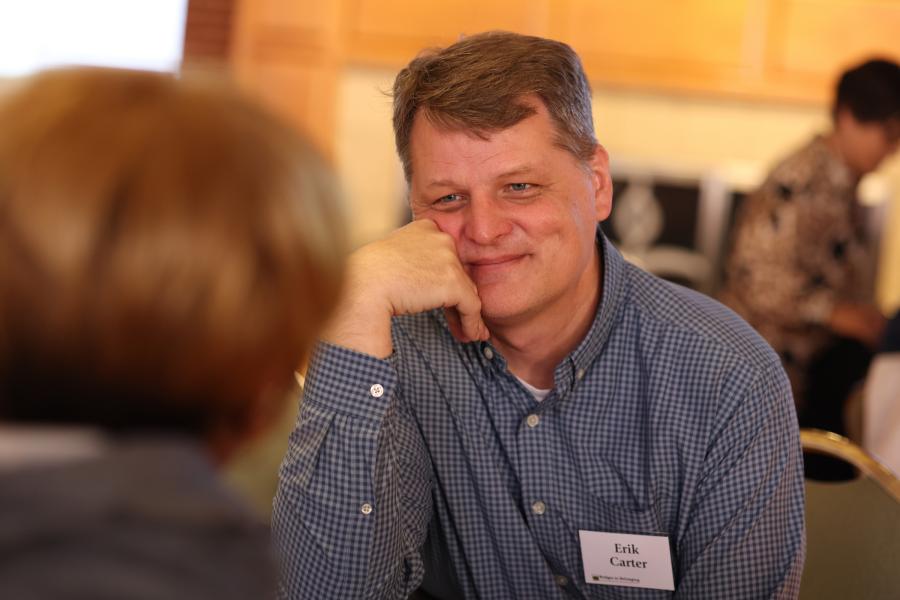
Our project is led by an interdisciplinary group of faculty members who are passionate about faith, disability, mental health, and chronic illness. While every member of our team has a professional interest in this work, each of us also has a personal investment in this topic.
Angela Reed is Associate Dean for Academic Affairs, Associate Professor of Practical Theology, and Director of Spiritual Formation at George W. Truett Theological Seminary.
Erik Carter is Luther Sweet Endowed Chair in Disabilities, Executive Director of the Baylor Center for Disability and Flourishing (BCDF), and Professor of Educational Psychology in the School of Education.
Gaynor Yancey is Lake Family Endowed Chair in Congregational and Community Health at George W. Truett Theological Seminary and the Director of the Center for Church and Community Impact (C3I) in the Diana R. Garland School of Social Work.
Elyse McMullen is the Program Manager for Bridges to Belonging.
Testimonials from our First CLC
Our first cohort launched in fall 2024 and concluded this spring. It has been such a gift to partner with our first cohort of churches! Read more about their experience below.
"Through the resources and support of the Bridges to Belonging project, our church has been positively transformed to better welcome and accommodate its members with disabilities."
“The most encouraging moments we’ve had are knowing we’re not alone and that the program’s leaders are always praying for our congregation.”
"It has been such a blessing to participate in our congregation’s efforts to create a welcoming worship experience for everyone. God is using Bridges to Belonging to impact the lives of so many and to remind us of what it truly means to be made in God's image.”
"The leadership made every meeting interactive, valuable and enjoyable. 'Belonging' is a new very strong word in our ministry vocabulary!"
Questions?
Contact Elyse McMullen, Program Manager (elyse_mcmullen@baylor.edu)
Frequently Asked Questions
The final deadline for applications was July 6, 2026. Please reach out to Elyse_McMullen@baylor.edu if you have any questions.
We expect to begin notifying churches of their application status by mid-May.
The Bridges to Belonging CLC is an 18-month commitment that goes from August 2026 to December 2027. Gatherings will take place across a 12-month period from August 2026 to June 2027.
Yes, the four large gatherings at Baylor University as well as the three pod gatherings hosted by participating churches will require in-person attendance.
Each core team will be placed into a pod of three churches. We expect to assign pods based on common interest, church distinctives, and geographical location.
Each pod will have a designated B2B team member who will serve as a coach and resource partner across the 18-month period.
In between large group gatherings, core teams will meet in their pods for small group learning, reflection, and work time led by their designated B2B team member. Each core team will have the opportunity to host one of these gatherings and visit their fellow pod members’ churches at the other two gatherings.
Pods are meant to support accountability, collaboration, and mutual encouragement.
Yes, we will visit your church twice – at the beginning and the end of your time in the CLC.
The first visit will take place sometime in Fall 2026, and the second visit will take place sometime in Fall 2027.
Church visits are ways that our team will get to know your core team, your space, and your church. We will not be there to tell you what to change or how to run your ministry.
No, churches from all Christian denominations are invited to apply.
No, we do not prescribe specific changes for your church, as we recognize that every church context is unique. We will ask your core team to reflect on and adapt your practices. The CLC provides practical and creative strategies to include all youth and young adults, which your team can implement in ways that make sense for your ministry. Our goal is to provide ideas for change that are both attainable and sustainable, helping your church grow in inclusion without feeling overwhelmed.
Each participating church forms a core team of three to five individuals:
One youth or young adult minister*
At least two additional members (e.g. another church staff member, an individual with a disability, a volunteer, a lay leader, a parent/caregiver)
Although members may change or be added over time, striving to maintain some consistency is really helpful.
*If you do not have a youth or young adult minister on staff, a lay leader or volunteer may fill this spot. Reach out to Elyse McMullen (elyse_mcmullen@baylor.edu) for more information.
No, not all dates have been set.
Our first gathering will take place on August 17-18, 2026 at Baylor University.
We will gather at Baylor University for a one-day gathering in November 2026 and March 2027 and a two-day gathering in June 2027. These dates will be announced as they get closer.
Core teams will meet for pod gatherings three times. Pods will work together to select a date during each of these blocks:
September – October 2026
January – February 2027
April – May 2027
Church visits will be scheduled in collaboration with your core team. The first visit will take place sometime in July – September 2026, and the second visit will take place sometime in October – December 2027.
Due to the nature of our funding (a five-year grant), we are unsure about the nature and potential of future cohort opportunities. It is possible this will be the last time we will offer anything like this here at Baylor.
We encourage you to follow along and keep an eye out for new resources developed by our team. We envision creating additional opportunities for participation as our project develops and builds out our resource library. In addition, we encourage you to stay connected with George W. Truett Seminary, the Baylor Center for Disability and Flourishing, and the Baylor Center for Church and Community Impact.